Sold on this site
Half-day waterfalls tour
Wildlife viewing on walks
- Length5.5 hours
- Natural Bridge1-hour guided walk
- Plateau75 minutes
Guides
Language
Currency
See open slotsfrom $88 · cancel without payingInteractive tick list
Checklist · 9 points
Mark items as done. Your progress is saved on this device only.
0 / 9 ready
All done. Only the booking is left: your date and your pickup stop.
Get a seatAn ancient volcano, a fragment of the rainforest that once covered a supercontinent, and a long list of creatures found almost nowhere else. This is the living mountain behind the waterfalls.
Editorial team, springbrooknationalparktour.com · Updated November 8, 2026 · 8 min reading time
Some Springbrook National Park facts first. The park covers 6,725 hectares, split into four sections: the Springbrook Plateau, Mount Cougal, the Natural Bridge and Numinbah.1 It is one of about 40 separate protected areas, strung between Newcastle and Brisbane, that together form the Gondwana Rainforests of Australia World Heritage property.2,6 Together they hold the largest spread of subtropical rainforest anywhere on Earth.7
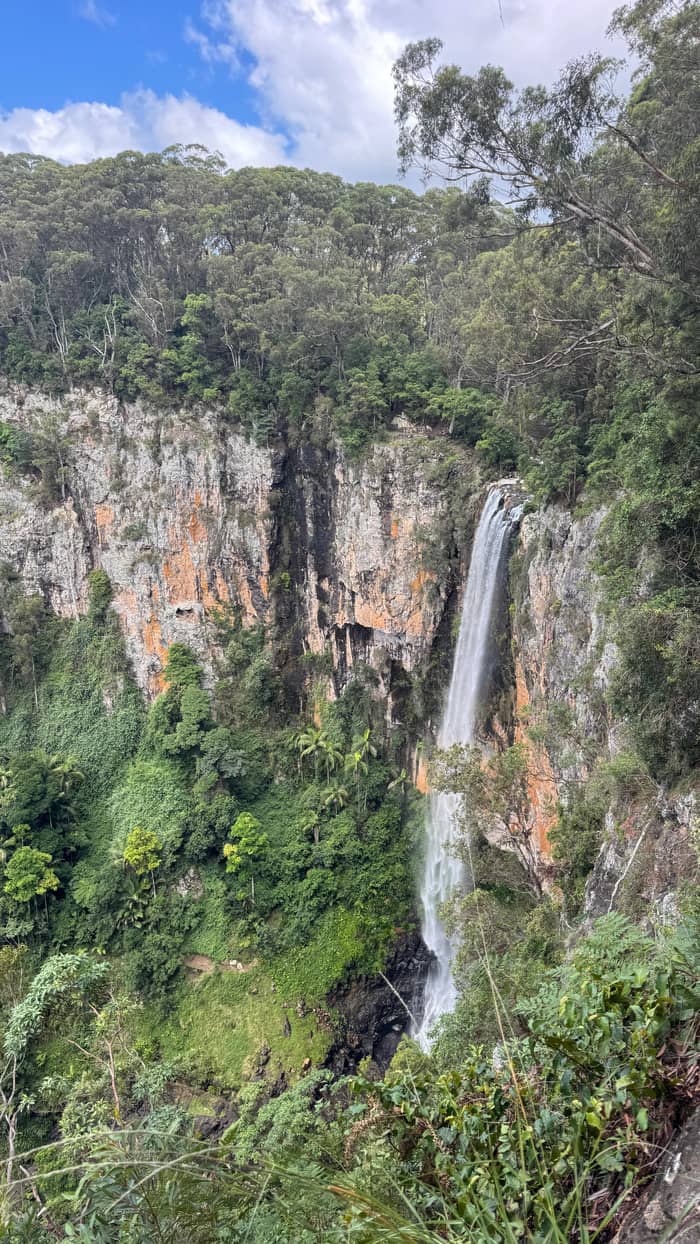
The forest types change quickly with height and soil. On the plateau you pass from rainforest, both subtropical and temperate, into open eucalypt forest and patches of montane heath, often within a single afternoon.8 Among Springbrook National Park animals, Destination Gold Coast counts over 100 types of birds, frogs and reptiles, and the forest holds trees more than 2,000 years old.9 That variety packed into a small area is what makes the park so rich for its size.
Rainforest is rare in Australia. The Australian Government's World Heritage notes say rainforests cover only about 0.3 per cent of the continent, yet hold about half of its plant families and about a third of its mammal and bird species.10 The listing also counts more than 270 threatened species, plus relict and primitive groups, for which these reserves are the main home.11 Every walk here passes through some of the most concentrated life on the continent.
Who lives here
| Animal | Where | When | Tip |
|---|---|---|---|
| Pademelon | Forest edges | By day3 | Move slowly |
| Albert's lyrebird | Plateau forest floor | Breeds in winter22 | Listen for mimicry23 |
| Riflebirds, catbirds | Natural Bridge | By day24 | Bring binoculars |
| Glow-worms | Natural Bridge cave | After dark25 | Torch off near them |
| Microbats | Natural Bridge cave | At night26 | Watch the opening |
| Fireflies | Forest at night | Summer nights27 | Look along the track |
Drawn from Destination Gold Coast's park listings and the NSW lyrebird profile; sightings are never guaranteed.24,4
The Springbrook National Park volcano story explains the cliffs, the waterfalls and the views. Destination Gold Coast describes Springbrook as sitting at the top of the hinterland, along the caldera of an ancient volcano.5 It says the shield volcano that built Tamborine Mountain and the ranges around it erupted some 23 million years ago.13 Lava flows built a vast, gently sloping dome, and rivers have been cutting it down ever since.
The center of that volcano is the peak that fills the view at the Best of All Lookout. Wollumbin, also called Mount Warning, rises to 1,157 m and is a remnant central vent of the old volcano.18 Around it lies the Tweed Shield caldera, which the World Heritage notes rate as perhaps the best-preserved erosion caldera on the planet.19 Springbrook's plateau is a surviving piece of the old shield, left standing along the rim.
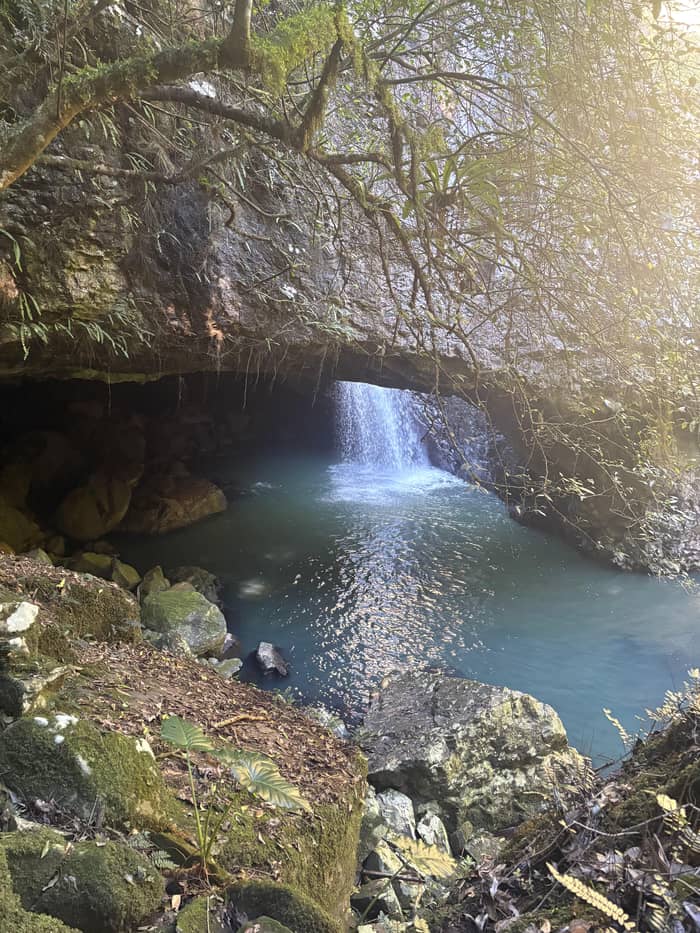
The waterfalls are the volcano still being taken apart. The heritage notes describe high falls crashing into steep gorges as examples of erosion, an ongoing natural process.20 At the Natural Bridge, the force of the waterfall shaped the basalt cave and its arch.21 Each wet season the creeks cut a little deeper, and the cliffs you stand on today are a moment in a story that is still running.
Deep time to today
Jurassic
Hoop pine lineage, about 180 million years ago.12
Volcano
Some 23 million years ago, by the tourism body's dating.13
Timber era
The Mount Cougal sawmill recalls it.14
World Heritage
The World Heritage Committee lists it in November 1986.15
Extension
In 1994 the listing grows to take in south-east Queensland.16
New name
The name Gondwana Rainforests of Australia is approved in 2007.17
Rainforest once covered most of Australia, and the remnants on these ranges are living links to the supercontinent of Gondwana. At the Best of All Lookout, a small pocket of Antarctic beech survives from a cooler past, a living link to the forests of Gondwana.30 The Australian Government says almost every surviving stand of Antarctic beech cool temperate rainforest lies within the Gondwana Rainforests.31
The hoop pines at the Natural Bridge go back further still. Their line reaches back to the Jurassic, about 180 million years ago, a period the park names the Age of the Conifers.12 The World Heritage listing describes these reserves as one of the most significant survival centers for Araucarians, the most ancient and primitive of the world's conifers.32 Brush box beside the Twin Falls track belong to a type dated elsewhere in the area at 1,500 years.33
What survives is a small share of what was. When Europeans arrived, rainforest covered just 1% of the land, and only a quarter of that rainforest is left.34,35 The heritage notes list climate change, heavy visitation, fire management and pest species among the greatest challenges for the reserves.36 Keeping to the tracks, cleaning mud off your boots between parks and leaving nothing behind is a small, real contribution.
What to look for
Choose the creature you most want to meet.
If I want to see a wallaby
Pademelons at the forest edge
They are the mammals day visitors see most often.3
If I want the lyrebird
Come in winter and listen
If I want the glow-worms
The Natural Bridge at night
Thousands of them light the cave after dark.25
If I love birds
The Natural Bridge by day
Riflebirds, catbirds and fruit-doves live there.24
If I want the geology
The Best of All Lookout
It looks over the eroded caldera to Wollumbin.28
See it with a guide
Sold on this site
Wildlife viewing on walks
Night life
The cave after dark
Full day
Koalas and rainforest
Pademelons are the mammals day visitors spot most often: small, shy rainforest wallabies often seen at the forest edge.3 Move slowly and quietly near clearings and picnic areas and you may see them nibbling the grass, ready to bound back into the scrub at the first sudden noise. Never feed them; human food does them harm. A quiet picnic, eaten and packed away, is the best way to watch them go about their day.
Birds are the easiest wildlife to find. By day the Natural Bridge section is known for wompoo fruit-doves, green catbirds and paradise riflebirds, along with threatened rarities including the koala, the sooty owl, the tusked frog and the cascade tree frog.24 Along the cave walk you can hear the shrill call of catbirds and may see tree frogs and lizards.41 Bring binoculars; many of these birds feed high in the canopy.
The World Heritage notes single out the Border Group of reserves for the densest mix of frog, snake, bird and marsupial species in the country.29 That richness comes with responsibility. Snakes are part of the picture, so watch where you put your feet, and give any animal you meet space and time to move away. A wildlife sighting is better for both of you at a distance, and a quiet group sees far more than a loud one.
Compare the prices
Enter a tour and your group to get the total.
Look at 3 options
Enter a tour and your group to get the total.
≈
View≈
View≈
ViewStarting prices from GetYourGuide, converted at the ECB reference rate. You will see the exact price when booking.
The bird most worth listening for is Albert's lyrebird. On the plateau, Destination Gold Coast suggests listening for its impressive mimicking calls.42 The NSW threatened species profile describes a large, long-tailed bird that lives mostly on the ground, with rich chestnut plumage.43 It lives only in a small corner where south-east Queensland meets north-east New South Wales, and these ranges are part of that home.44
It is much more often heard than seen: shy, wary and difficult to approach.4 Its loud call is often mixed with mimicry of other species, so a burst of several different birds from the same patch of forest floor may well be a single lyrebird.23 It feeds on the ground where the leaf litter is deep and moist and fallen logs lie about, raking through the litter.38 Look for scratched-over patches of leaves beside the track: they may be the only sign that a lyrebird has passed.
Winter is the season to listen. Albert's lyrebirds breed over winter, with nests found between late May and mid-August, and the female lays a single egg and raises the chick on her own.22,45 Walk quietly in the cool months, stop where the forest floor is thick with leaves, and wait. Hearing the full performance, a whole forest's worth of birds from one throat, is one of the great rewards of the mountain.
Video
Into the Wild Films on YouTube · Tap play to load the video; not before.
The Border Group is a particularly rich area with the highest concentration of frog, snake, bird and marsupial species in Australia.
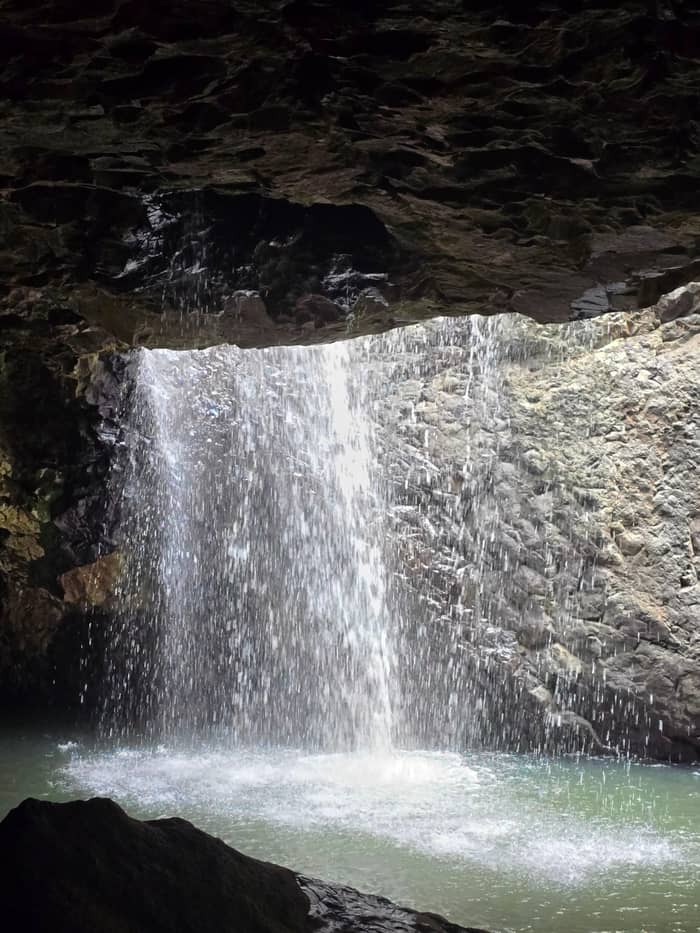
After dark the mountain changes cast. At the Natural Bridge, thousands of glow-worms switch on across the cave walls, and microbats dart through the dark above the falling water.25 The glow-worm colonies of this species reach their highest numbers at that one large overhang.46 On summer nights the park listing adds luminous fungi and fireflies to the show.27 For a few warm, damp nights each summer the whole forest seems to glow in its own small ways.
The glow-worms are young fungus gnats, still in the larval stage, and the adults live for just 3 days.47,48 They hunt with light, hanging sticky snares to catch the insects drawn to their glow.49 The glow worm page on this site covers their life, the best months and how to visit without disturbing them, including the rules on torches and insect repellent. In short: come quietly, keep the light low, and give your eyes a few minutes in the dark.
Owls, frogs and possums are part of the night chorus too, and the sooty owl is among the rare species of the Natural Bridge section.24 If you go out after dark, take a torch, wear closed shoes and keep to the formed track.37 Keep the beam low, and switch it off when you reach the glow-worms. The night forest is easy to disturb and slow to settle, so move gently and leave it the way you found it.
These ranges are Aboriginal Country, and the names on the map carry that history. Destination Gold Coast acknowledges the Kombumerri families of the Yugambeh Language Region as the Traditional Custodians of the land where it is based, and recognizes their continuing connections to the lands and waters of South East Queensland.50,51 Warrie, the long canyon walk, takes its name from a local Indigenous word meaning rushing water.52 Tamborine means wild lime in the Yugambeh language.53
Across the border, Wollumbin matters deeply to Aboriginal people, and above all to the Bundjalung nation, who know it as a place of sacred ceremony.54 Its name is said to mean cloud catcher.55 Neither the summit walk nor the Aboriginal Place is open, and the NSW parks service says decisions on the track's future will follow the wishes of Aboriginal custodians.56,57 Respect that when you take in the view, and treat the mountain as more than scenery.
The settler story is younger. At Mount Cougal, the remains of an old sawmill recall the days when these forests were prized only for their timber.14 Writers, poets and artists began moving to Springbrook in the early 1900s, and the creative streak shows in the village to this day.58 Protection came in stages: the World Heritage Committee first listed the property in November 1986, extended it to reserves in south-east Queensland in 1994, and approved the name Gondwana Rainforests of Australia in 2007.15,16,17
FAQ
Rainforest, both subtropical and temperate, shares the plateau with open eucalypt forest and montane heath.8
It covers 6,725 hectares in four sections, from the plateau to Mount Cougal.1
Destination Gold Coast acknowledges the Kombumerri families of the Yugambeh Language Region.50
Sources
Planning a day in the Springbrook rainforest? A real person answers here.